

Choose how to build
Verifications
Request income, employment, or asset information through one workflow and receive a completed report.
Data APIs
Let users connect payroll accounts, then retrieve the payroll records your application needs.
How information is shared
- Payroll: Users connect their employer or payroll-provider accounts through Link.
- Banking: Users connect financial accounts during the verification process.
- Documents: Documents can be uploaded directly through the API or collected from users in Link.
Verifications
Use Verifications when you want one order lifecycle and a completed report for payroll, banking, or Doc VOI. A typical implementation creates a user, orders a verification, starts an embedded or invite session when user action is required, listens for lifecycle updates, and retrieves the completed report.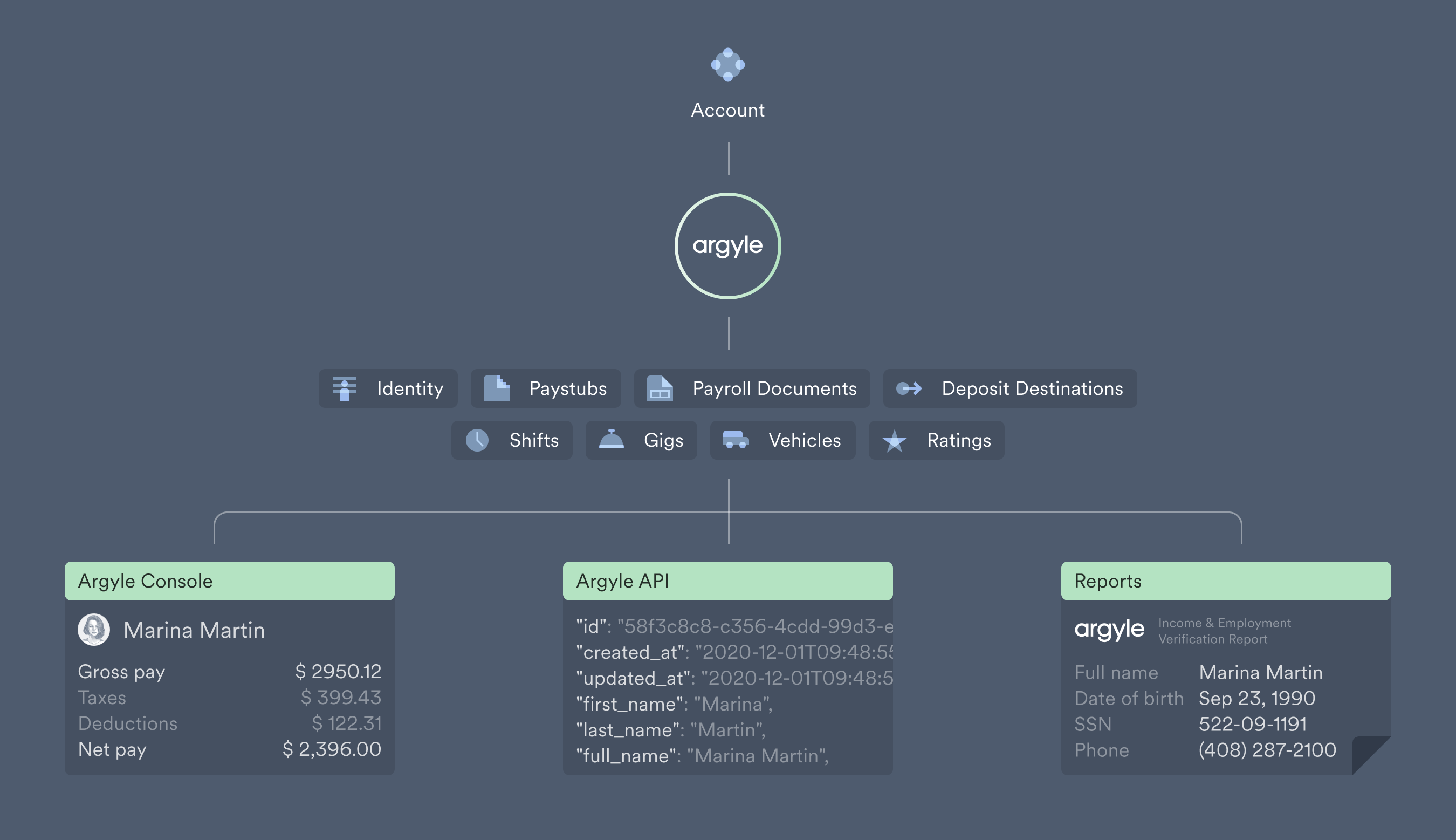
Payroll Data APIs
Use the Data APIs when your application needs the underlying payroll records for a custom or existing workflow. Banking implementations use Verifications instead. Users connect their payroll accounts through Link. Your application tracks account and synchronization events, then retrieves the required identities, paystubs, payroll documents, gigs, shifts, vehicles, ratings, and other available resources.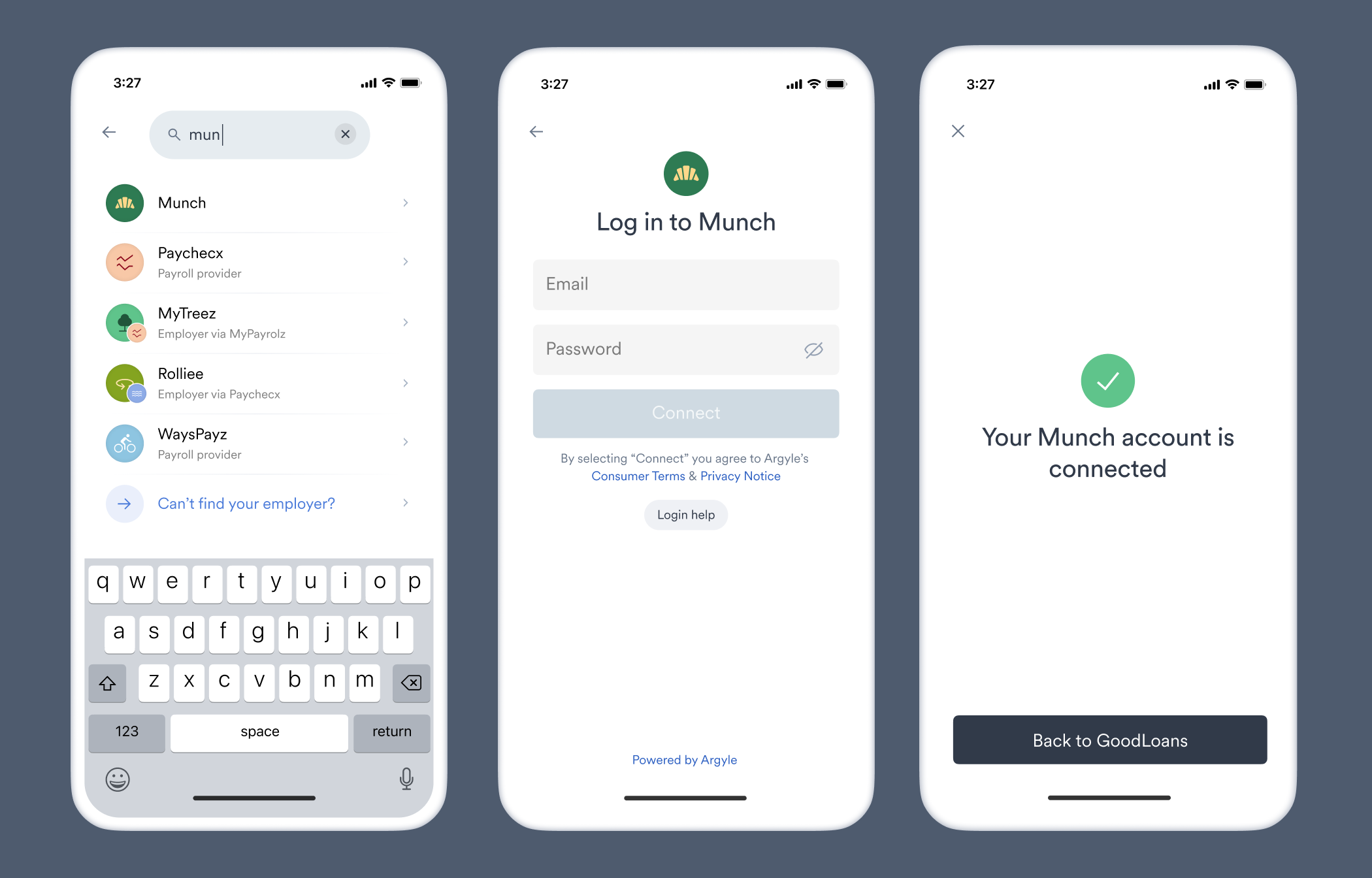
Verticals
Verticals bring together the products, data, and workflows required for a specific industry or program. A vertical can use Verifications, Data APIs, or both. Explore Verticals.Document uploads
Documents can be uploaded directly through the API or collected from users in Link. Supported documents include W-2s, 1099s, paystubs, proof of identity, proof of address, and other files. Doc VOI is a mortgage verification that uses uploaded paystubs and year-end income documents to produce an income report when a direct payroll connection is not used. Other document uploads can support standalone OCR, authenticity, or document-processing workflows.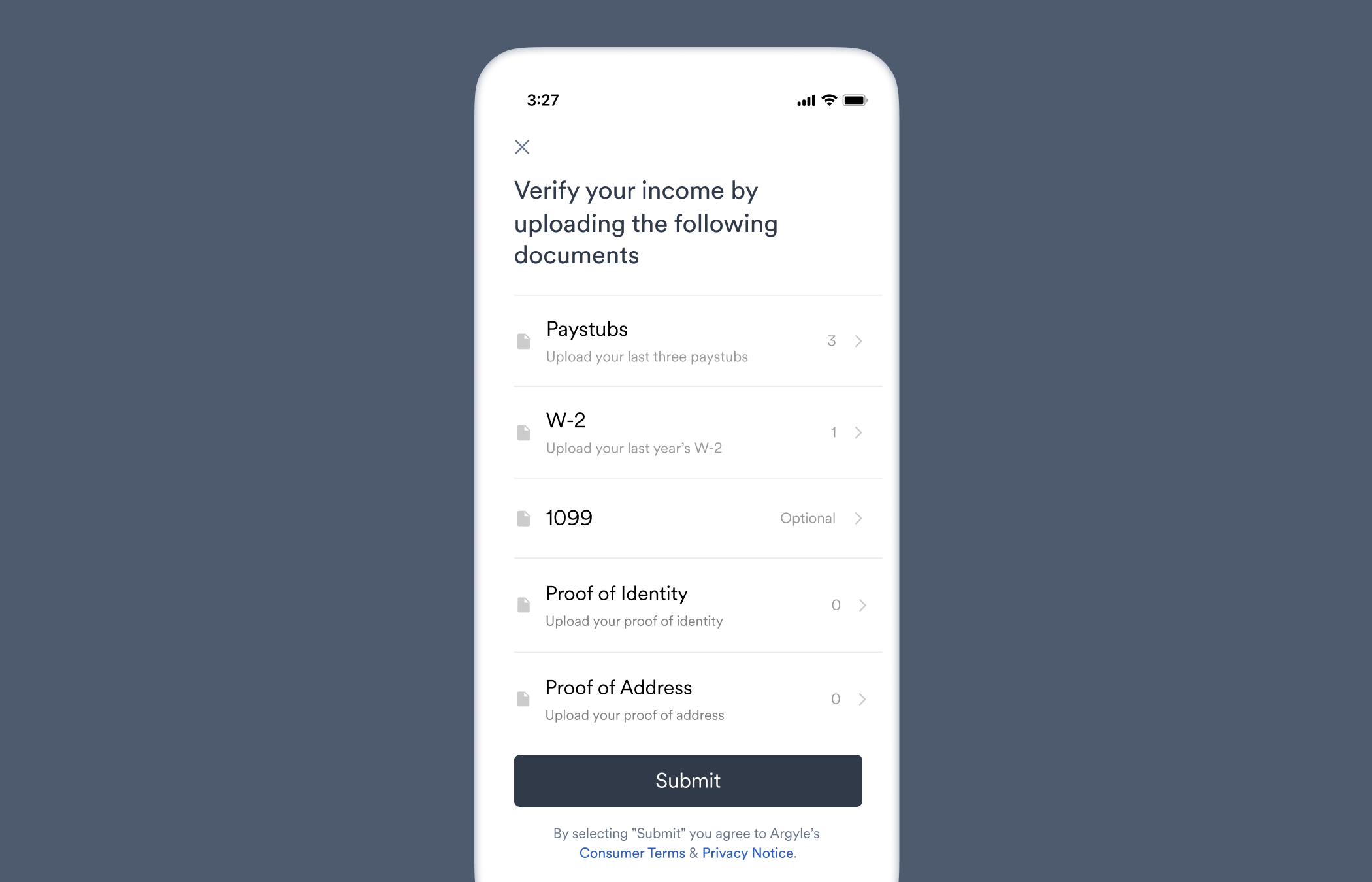
- For Doc VOI, visit the Doc VOI guide.
- For standalone uploads, OCR, and authenticity, visit Document Uploads.