

Overview
Verify assets and income and generate verification reports by allowing users to directly connect their financial institutions.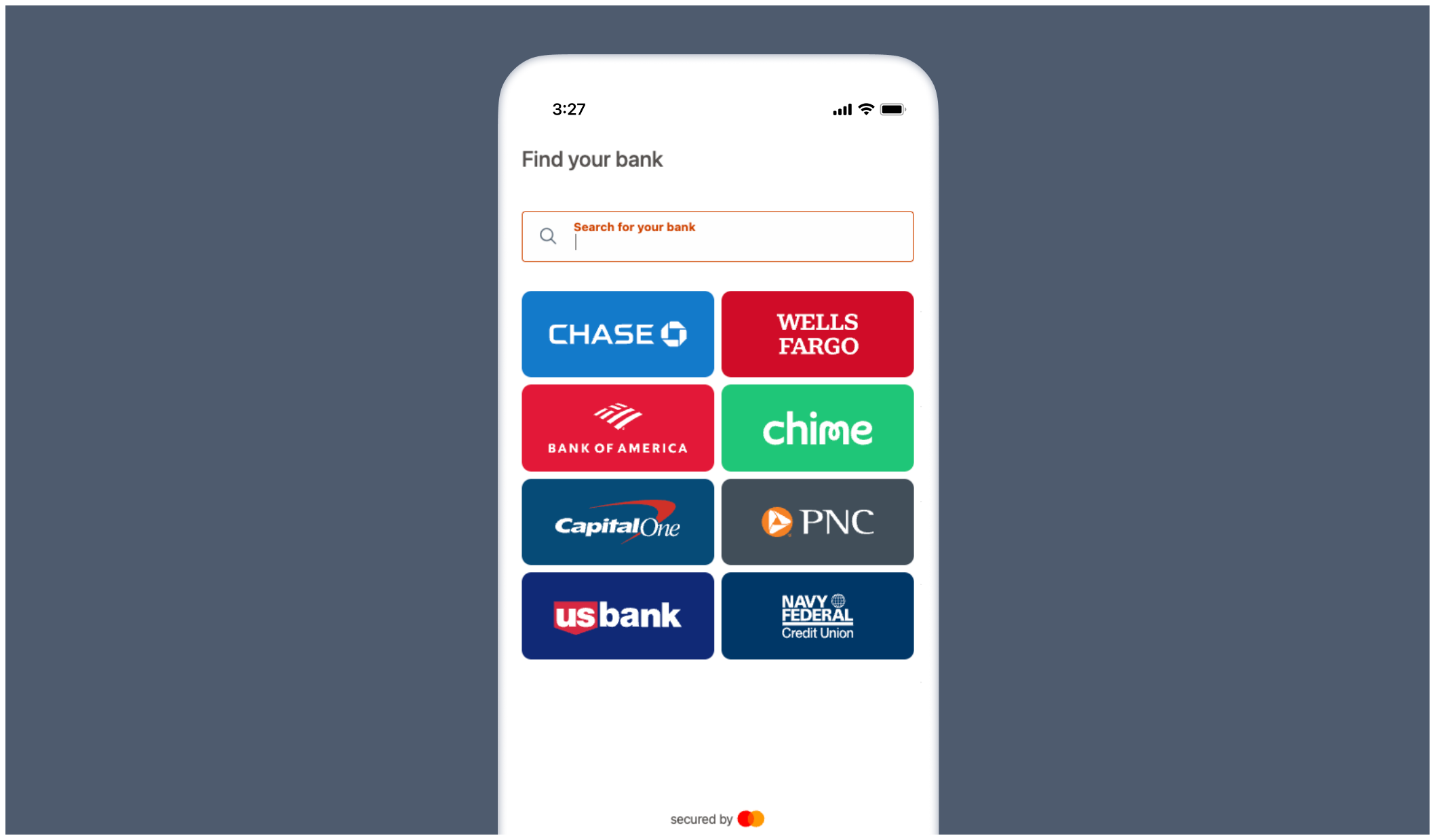
Supported report types
Workflow
Argyle’s Postman collection contains examples of the banking endpoints mentioned below.Create an Argyle user
The Sandbox testing environment for banking supports a maximum of 500 users. To stay within this limit, implement user-management workflows and remove inactive users when they are no longer needed.
- Create or update an Argyle user.
- In the request body, include
first_name,last_name, andaddress. Also provide at least one identity field (ssnorbirth_date) and at least one contact field (emailorphone_number). These fields are only required for banking reports.
User fields for banking reports
User fields for banking reports
-
The top-level (root) object should contain user details (user being the borrower in most cases).
- The
external_metadataobject should contain details about the person or entity making the lending decision.
- The
external_metadata object is optional.Example user fields for banking reports
Example user fields for banking reports
Create connection link
- Invite (Email or Phone)
Generate a banking report
- When you receive a Connect Event webhook with
"event_type": "done"a banking report can be generated — this event signifies the user has connected their banking accounts and successfully authorized the related connections. - Generate a banking report and specify the report type in the request.
- (Optional) Specify via the
webhookfield where to receive the Connect Event webhook notifying you that the report has been generated. - Save the
file_urlandjson_urlvalues returned in the response after generating a report.
If the user only connected account types (e.g. Line of credit) that are not eligible for the specified report type, the API will return a 400 (Bad Request) response:
Retrieve report PDFs and JSONs
- When you receive a Connect Event webhook with
"event_name": "done"a banking report has been successfully generated and can be retrieved. - To retrieve a PDF version of the report, call GET
{file_url}— make sure to include Argyle authentication headers. - To retrieve a JSON version of the report, call GET
{json_url}— make sure to include Argyle authentication headers.
Day 1 Certainty® and AIM
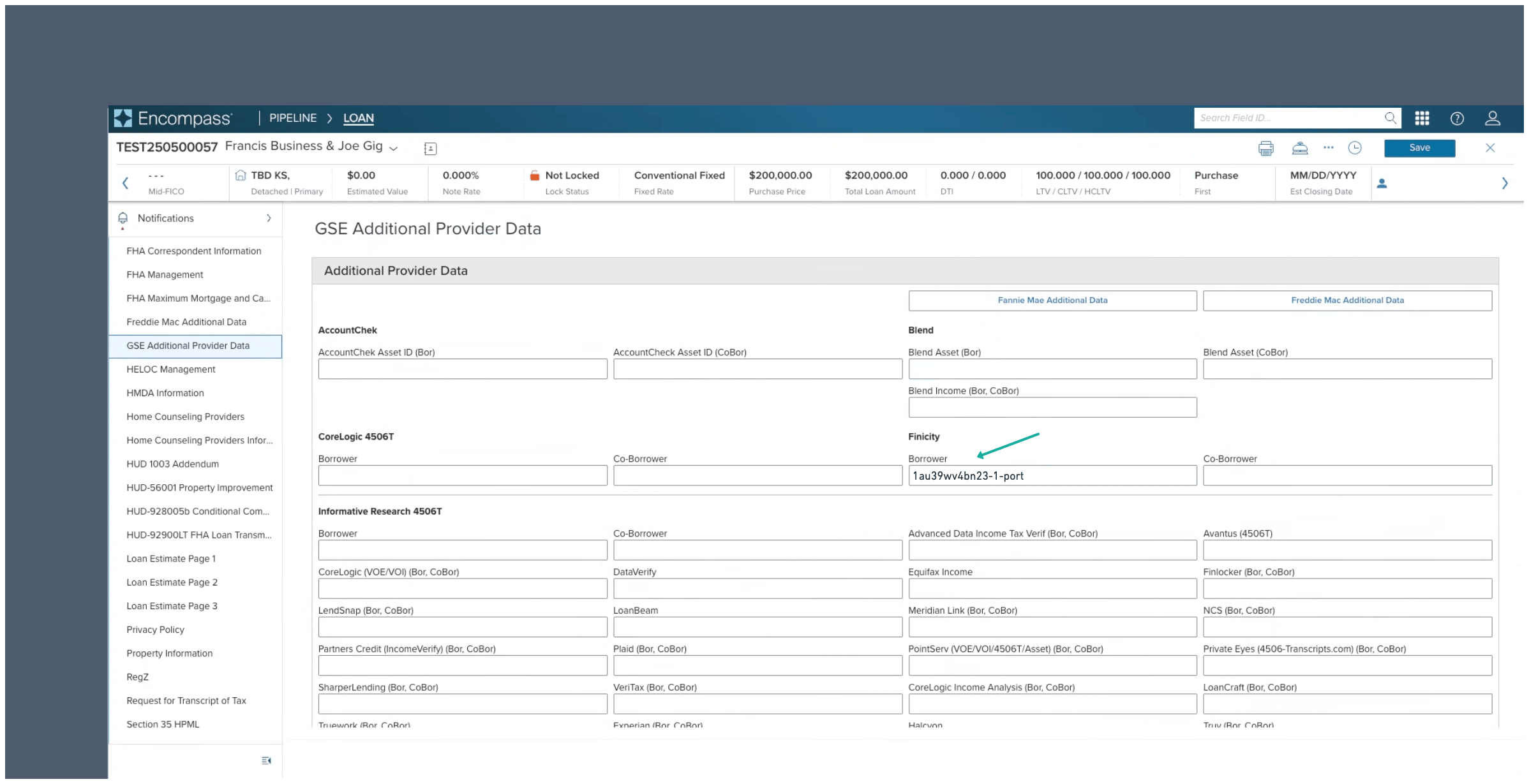
For mortgage use cases, the reference number for Day 1 Certainty® or AIM is provided in theportfolio field returned after calling GET {json_url}. In Encompass®, this reference number can be submitted in the Finicity Borrower field:
Connect events
Connect Event webhooks are sent:- When the user completes certain steps of the connection process.
- When a report is being and has been successfully generated.
The user opened the bank connection experience.
The user opened the bank connection experience.
The user selected a financial institution.
The user selected a financial institution.
The user attempted to submit credentials.
The user attempted to submit credentials.
The user submitted invalid credentials.
The user submitted invalid credentials.
The user submitted valid credentials.
The user submitted valid credentials.
Eligible accounts were found.
Eligible accounts were found.
The user selected and saved eligible account(s).
The user selected and saved eligible account(s).
The user successfully submitted their accounts. — event_type: done
The user successfully submitted their accounts. — event_type: done
Report generation is in progress.
Report generation is in progress.
Report generation has successfully completed. — event_name: done
Report generation has successfully completed. — event_name: done
Related endpoints
- The reports endpoint can be used to retrieve reports by user or report ID.
- The bank accounts endpoint can be used to retrieve a list of the user’s bank accounts.
- The financial institutions endpoint can be used to search for supported financial institutions.
Testing profiles
When you’re ready to begin testing, contact your Argyle Customer Success Manager to enable banking permissions.
The Sandbox testing environment for banking supports a maximum of 500 users. To stay within this limit, implement user-management workflows and remove inactive users when they are no longer needed.
- Sandbox — the
FinBank Profiles AorFinBank Profiles Bfinancial institutions - Production — the
FinBank BillableorFinBank Oauth Billablefinancial institutions
For specific scenario testing, the following sample test users are also available: